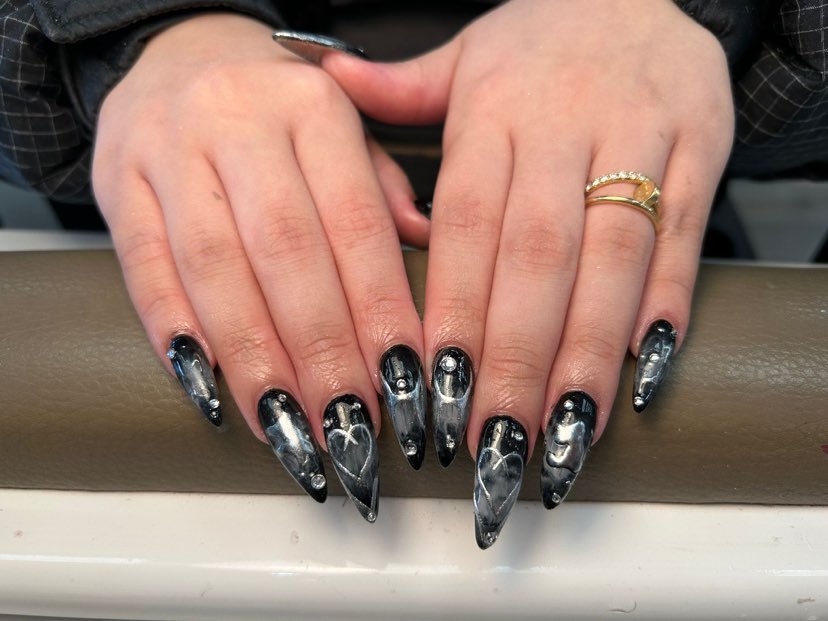
Most people wear gel and acrylic nails for years without any problem. A growing number, however, develop an allergy to the chemicals that make gel harden, and once that allergy develops it is usually lifelong. Knowing the signs and how to reduce the risk is worthwhile for anyone who has gel nails, and especially for anyone doing them at home.
This is general information, not medical advice. If you think you are reacting, see your GP or a pharmacist.
What causes gel nail allergy?
Gel polish, builder gel and acrylic all contain acrylates or methacrylates, small molecules that join together (polymerise) when cured under a lamp or as acrylic sets. One of the most common is HEMA (2-hydroxyethyl methacrylate).
Once fully cured, the finished nail is generally stable. The risk comes from uncured or partly cured product touching the skin. Repeated contact can sensitise the immune system, and after that even small exposures can trigger allergic contact dermatitis.
Dermatologists in the UK and Ireland have reported more cases of acrylate allergy in recent years, and the British Association of Dermatologists has warned about the risks of home gel kits.
Signs of a reaction
Symptoms usually appear hours to a couple of days after an appointment or application and can include:
- Itching, redness or swelling around the nails or fingertips.
- Dry, cracked or blistered skin around the nail.
- Loosening or separation of the nail from the nail bed.
- Rashes in other places that you touch, such as the eyelids, face or neck.
- Rarely, more widespread symptoms.
If you notice these, stop using gel or acrylic products and seek advice. A GP can refer you for patch testing to confirm what you are allergic to.
Why home kits raise the risk
Home gel kits have made gel nails cheap and convenient, but they increase the chance of skin contact with uncured product:
- Gel on the skin. Without training, it is easy to flood the cuticle or sidewalls.
- Mismatched lamps. Gels are formulated to cure under specific lamps. A cheap or mismatched lamp may not cure the product fully, leaving uncured chemicals on the nail.
- Thick layers that do not cure through.
- Handling sticky residue or touching brushes and wipes with bare hands.
Trained technicians are taught to keep product off the skin, use matched systems and cure properly. That does not remove the risk completely, but it lowers it.
How to reduce the risk
- Choose a trained technician who uses a professional system with the lamp recommended for that gel.
- Keep product off the skin. If you do your nails at home, leave a tiny gap at the cuticle and sidewalls, and wipe away any spills before curing.
- Cure fully, for the time the manufacturer recommends, using the matching lamp.
- Apply thin layers.
- Avoid touching uncured gel, sticky residue or used wipes with your skin.
- Stop at the first sign of a reaction. Continuing to use the products usually makes the allergy worse.
The EU ban on TPO
In 2025 the EU changed the rules on one gel ingredient. TPO (trimethylbenzoyl diphenylphosphine oxide), a photoinitiator that helps gel cure under the lamp, was classified as a substance that may damage fertility. As a result it has been prohibited in cosmetic products in the EU since 1 September 2025, which includes Ireland. Many brands have reformulated with other photoinitiators.
This ban relates to TPO's classification, not to allergy, and it does not affect HEMA or other acrylates. If you buy gel online from outside the EU, check the ingredients.
If you are allergic, what are the options?
People allergic to acrylates usually need to avoid gel, builder gel and acrylic altogether, because these product types are closely related. "HEMA-free" gels exist, but many still contain other acrylates that can cross-react. Ask a dermatologist before trying them.
Alternatives include:
- Regular nail polish, which uses different film-forming ingredients.
- Manicures focused on shaping, cuticle care and buffing to a natural shine.
- Press-on nails applied with adhesive tabs rather than glue, after checking ingredients.
Acrylate allergy can also matter beyond nails. Some dental, medical and industrial materials contain acrylates. Tell your dentist and doctor if you have been diagnosed.
Related guides
Should you avoid gel nails altogether?
For most people, no. The majority of gel and acrylic wearers never develop an allergy. Choosing a trained technician, avoiding skin contact with uncured product and acting quickly on any signs of irritation are the sensible precautions. If you have already reacted, avoiding the products is the safest course until you have seen a doctor.
Frequently asked questions
Can you suddenly become allergic to gel nails?
Yes. Many people have gel nails for months or years before reacting. Sensitisation builds up with repeated skin contact, and once it develops it is usually permanent.
What does a gel nail allergy look like?
Itching, redness, swelling or blistering around the nails or fingertips, sometimes with nails lifting from the nail bed. Rashes can also appear on the face, eyelids or neck.
Is HEMA-free gel safe if I am allergic?
Not necessarily. Many HEMA-free gels contain other acrylates that can cause the same reaction. Speak to a dermatologist before trying them.
Is gel polish banned in Ireland?
No. Gel polish is still sold and used. What changed is that the ingredient TPO has been prohibited in cosmetic products in the EU, including Ireland, since 1 September 2025, so products must not contain it.